
.svg)
.png)
.svg)
.jpg)
Image via CRC Press
o us at PlayerXP, the community is everything. So when we got the opportunity to talk to an award-winning veteran Communication Director from the Games Industry, we were beyond thrilled! Known for her many written works, Victoria Tran currently serves as the Communication Director at Innersloth, the studio behind the legendary social deduction game Among Us, as well as one of the Co-Runners of indie fund Outersloth. However, she also has a long history of community management within the realm of indie game development, so much so that her book "Mastering Community Management: Chaos, Compassion and Connections in Games" is a masterclass on how to establish and, more importantly, manage the community of your game which is something that we at PlayerXP absolutely love! So, without further ado, let's get into the questions we had for our wonderful guest and see what words of wisdom she chose to impart!

Q. Among Us launched in 2018 with little fanfare, then suddenly became a cultural phenomenon in 2020. You’ve previously described that growth as “building a plane while flying it.” What do you see as the biggest inflection points, and how did listening to the community help you recognize and adapt to them?
A. Listening to community has been built into Among Us since day one - it’s hard to say there’s a particular inflection point because we’ve always been paying attention. In 2018, the game was only available on mobile with local multiplayer. The core group of players we had wanted to be able to play online, so that was eventually added in, as well as more tasks, features, and an eventual Steam release. This is why it feels like “building a plane while flying it”!
.png)
Even though we have our own design goals for the game, we aren’t building it in a vacuum. We want to make sure we’re recognizing the core of what our audience is looking for and account for that in our decisions. Even if we can’t do exactly as they ask for whatever reason, we’re always thinking about how we can adapt to their needs and make something that’s fun and exciting to play.
Q. In a Wired interview you said the game’s sudden popularity felt like chaos, but you also emphasized growing responsibly and protecting mental health. Looking back, what signals helped you know when to scale up, and what would you recommend to teams facing similar growth?
A. Haha, in full honesty, the explosion of popularity meant we basically missed all the signals because it simply happened too fast. Even if we could catch it, we couldn’t hire fast enough because we weren’t ready. But that’s also powerful to know - being able to acknowledge that scaling too fast might cause even greater problems because you haven’t properly budgeted for it, or figured out how the structure would work.
For teams facing similar growth, I think it’s important to take a step back (even when it feels chaotic and adrenaline-inducing) and take stock of what it is you need in order of priority. Is it a community manager because now all of the players are trying to get your attention at once? If so, how can you ensure it’s not a snap decision that could ultimately harm your community? Are there people you can reach out to for advice or help on this? Especially as an indie developer, a strength you’ll have is the ability to talk directly to players honestly about how overwhelming the situation is and they tend to be more patient than you think!
Q. You’ve spoken about the emotional labor of community management and how lines between personal and professional can blur. What practices have helped you sustain yourself while still building safe and positive spaces for others?
A. I wrote a lot about mental health and community management [on my website], but in summary it’s all about getting to know yourself well. Everyone finds solace and energy in different ways. For example, I have strict rules about what I post on my own social media accounts so that it doesn’t feel like my hobbies can become content for the internet. I’ve come to recognize the crawling feeling I get in my stomach when I’m getting emotional over some post online, and how that means I need to get up and make a cup of tea or something. I also try to have hobbies that aren’t in front of a screen! But it took a lot of trial and error - give yourself the time and grace to pay attention to how you feel in your worst moments to be better at sustaining yourself in the day-to-day.
Q. At Innersloth, you are also involved in business development and partnerships. How do you bring the community’s perspective into those conversations to make sure collaborations feel authentic to players?
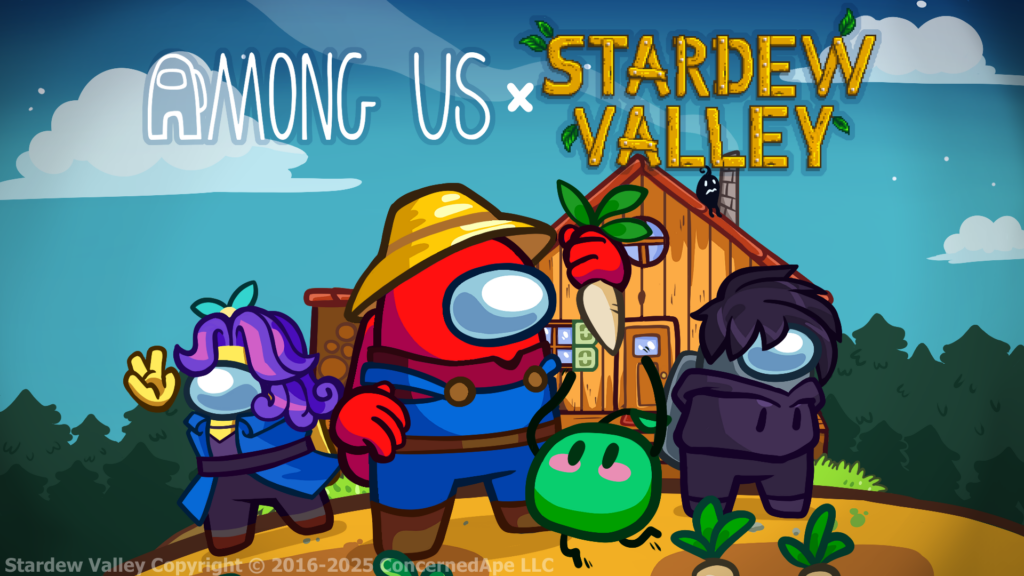
A. We’re always listening for collaborations our players want! People tend to be quite vocal about what they’d like to see, and we try to combine that with our own sensibilities of what we think works for the game. It’s a combination of what we think is cool, what the players are excited about, and if there’s any good thematic crossover. Bringing community perspective is always important for these kinds of things - you don’t want it to feel like a cash grab, and you also want to surprise them with something cool or goofy to keep them on their toes. It’s fun!
Q. You often talk about “sharing the elevator,” lifting up others by spotlighting fan art, memes, and other creations. How do you balance celebrating creativity with making sure the community stays cohesive and on track?
A. When you’re encouraging creativity, it means you have to accept a certain level of chaos and “go with the flow” mentality. I think the beauty of having a community is that there doesn’t necessarily need to be a “track” to be on, so long as the players themselves understand that we (Innersloth) operate on certain values that we want to highlight. In that sense, what you pay attention to matters just as much as what you don’t pay attention to. We will share and amplify creations that align with our values, and that extends to our collaborations as well. You become the role model for the community you lead!
Q. You’ve written about budgeting for community and suggested marketing can take up to 50% of production cost. In your experience, what kinds of outcomes or stories resonate most with leadership when proving the value of community work?
A. There’s no blanket answer to this - part of working in community management is knowing how to communicate in a way that aligns with people’s goals, values, and understanding. This applies to players but to your coworkers and leadership. Does your leadership care more about metrics? Then you’d focus on giving them more quantitative measures of success. Do they want to know more about how players are enjoying the game? Then bundle direct quotes, reviews, and sentiment in a way that is easy for them to connect with and read. This requires getting to know your team well, which is a key part of being in community!
Q. In your book you stress building communities rooted in kindness, compassion, and connection. What kinds of community signals or behaviors tell you those qualities are really resonating versus when things might be slipping away?
A. Sentiment reports are the quickest way to catch an early signal. If things are negative towards an update, it doesn’t necessarily mean your values are slipping, but it could mean needing to pay attention to more stressors in the community that could erode these values. From there, you can dig into the specifics - usually you can tell it’s slipping when there seems to be an increase in friction in your community. Not all friction is bad, but things like more negative voices, more tense discussions, players jumping to conclusions, silence, or high community churn may be an indication of something bigger going on.
Q. Your book structures community management across a game’s lifecycle, from pre-launch hype to post-launch retention. What are some differences between those stages that developers often underestimate, especially when it comes to listening to player sentiment?
A. Whew, big question! Obviously every stage is quite different and my book dives into that, but if I had to give you a succinct answer, it’d be the potential for scale. Pre-launch, you’re likely working with very little and have to take educated guesses on what the community will want based on what you’ve seen from competitors or similar games. During launch you’ll have your biggest influx of players and demands. But the one that people underestimate the most is the post-launch phase. Everyone talks about building your community for the biggest launch possible, but what happens after? What happens if the game is only a mild success? What if it’s a huge success? How do you handle the players then? That’s when sentiment plays an even bigger role - how you handle post-launch and what players are looking for can make or break your long term success as a studio.
Q. You broke down Among Us’s TikTok and Twitter strategies into buckets like updates, personality, behind the scenes, and gameplay. How do you evaluate which types of content are landing best, and decide where to focus limited resources?
A. Track those metrics! It’ll be more upfront work at first, but doing at least a monthly review of your social media pages, their best/worst performing posts, and reflecting on how much time everything took will help streamline what you do. What is connecting with people? What’s driving the discussion? Did anything inspire fan art? Taking the time to observe what works is key to better allocating your resources and energy.
Q. In your breakdown of the Among Us Twitter strategy, you highlighted kindness, boundaries, and community focus as guiding values. How do you measure whether those values are actually showing up in the community’s response?
A. When considering our values and kindness, I try to use quantitative and qualitative measures. Hyper-focusing on one means you lose a lot of important context that can better inform your strategy. Quantitatively, because we have such a large playerbase, a data measuring/reporting tool is helpful for capturing the overall sentiment. In general, if we’re seeing a good trend of positive responses, we can guess that the community is playing nice with each other and enjoying our updates. But then we’ll always make it a point to go in and actually read what people are saying - in reviews, social media comments, on Discord, etc.
An important thing I think a lot of people miss when it comes to measuring their values, is it’s not just about what people are saying to you as the brand. You need to look at if your players are engaged with each other: helping each other find information, responding to each other’s comments, active in your community spaces, etc. It’s not only about being focused on what people say to you, but what the wider community is doing that matters.
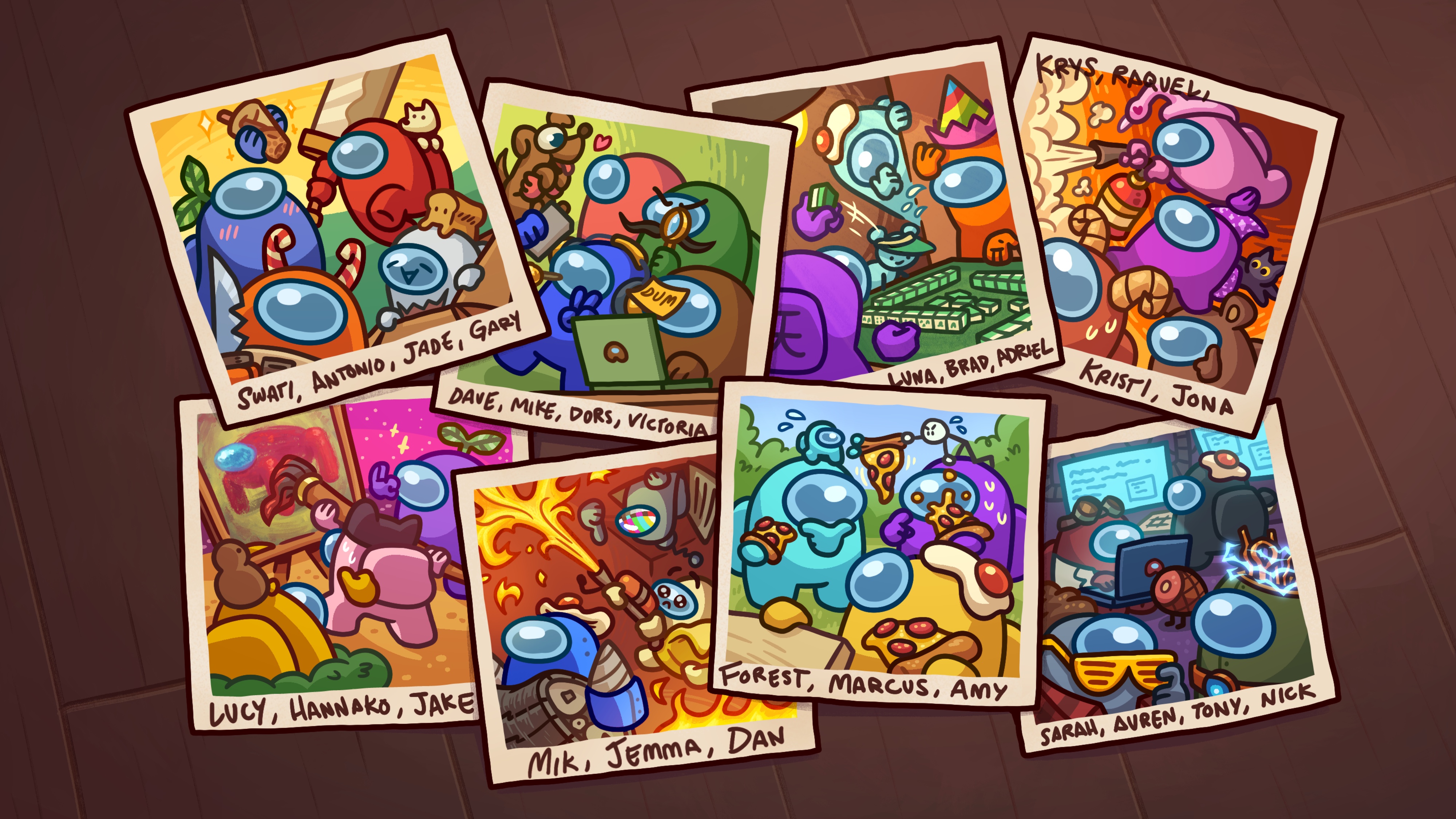
Q. If you had to pick one crewmate color from Among Us that best represents your community manager style, which would it be and why?
A. Cuteeee. I always pick Brown as my main Crewmate colour, mostly because at some point it was the least picked colour haha. Maybe that says something about my community manager style? But if I actually had to choose one, it’d be Red. It’s chaotic, passionate, and a bit of a troll colour because everyone thinks it’s the Impostor for some reason.
Q. What’s the most unexpected or delightful piece of fan content you’ve ever come across that still makes you smile today?
A. Ohhh gosh that’s difficult, we’ve had such good ones. My favorite might be when I made a typo on the official Among Us accounts, panic-tweeted, and then got a bunch of fan art of my Crewmate overwhelmed with tasks being clumsy. It was such a cute moment!
Q. If you could give one piece of advice to your past self on launch day for Among Us, what would it be?
A. Haha to be honest I’m not sure any advice could’ve prepared me for Among Us’ sheer scale of success, but also because that success came so much later. Maybe: get some sleep now.
And that’s a wrap! We’d like to thank Victoria for taking time out of her busy schedule to answer a few of our questions, and offering some expert-grade wisdom in the field of Community Management. We had an amazing time listening to what Victoria had to say, and we hope that you had just as good a time reading it!
Be sure to check out Victoria’s website, where you can see more of wisdom on display, also be sure to check out more of PlayerXP’s blog, where you can find more like this alongside many other articles that provide in-depth insight into the gaming community!
.svg)
At PlayerXP, we are dedicated to pushing boundaries. As leaders of the tech industry here in Cornwall, we use the latest Machine Learning technology and Cloud infrastructure to provide never-before-seen customer insights for organisations around the world. To ensure our products remain competitive and cutting-edge, we are constantly testing, iterating and innovating.
Get a firsthand look at Paws of Destruction, an incredibly fun mobile prototype built by tomorrow's game directors. See what our team thought of the pitch, read our Solutions Manager's take, and play the build right now.

PlayerXP puts its sentiment analysis approach to the test against Victoria Tran’s candid breakdown of the challenges facing community reporting. Instead of overpromising automation, it focuses on accurately capturing clear player feedback at scale while leaving nuance, sarcasm, and context to human expertise. The result is a practical, accessible tool designed to cut through noise and surface the insights that ac