
.svg)
.png)
.svg)

At PlayerXP, we have two core missions. First, building a deep, nuanced understanding of the games industry through a platform designed specifically for them and their communities. Second, and just as important, is giving something back. We do that through specialised, publicly available sentiment reports that provide meaningful insights to the wider industry, helping teams improve their games for players. Recently, Victoria Tran published a masterclass on community sentiment reporting. If you’re in community management and haven't read her books or blog, you’re missing out on some top-tier wisdom. In her latest post, she breaks down the “what, why, and how” of reporting and the messy reality behind it, highlighting seven key challenges in using sentiment analysis tools. We love a good reality check, so we decided to see how PlayerXP stacks up against her list.
Are we part of the problem or part of the solution?
Let’s break it down.
PlayerXP doesn’t attempt to automatically interpret sarcasm. Instead, it focuses on accurately processing the vast majority of clear, earnest communication, while leaving edge cases to human judgment.
This is intentional. Sarcasm is highly contextual and, in most structured game communities, far less common than people assume. When it does appear, it’s often signposted (like “/s” on Reddit) or clarified by the surrounding thread. By focusing on the 95% of straightforward interactions, we help community managers spend less time filtering noise and more time on the 5% that truly need human interpretation.
.jpg)
General-purpose tools often misread gaming language. Words like “kill”, “tank”, or “bomb” can mean very different things depending on context. PlayerXP is trained specifically on game-related language, so it understands that “I killed 20 enemies in that match” is positive gameplay, while “I hope the devs die” is clearly a negative hostile threat.
That context ensures the insights and feedback hitting your desk reflect reality, not a generic interpretation layer that needs constant correction.
Mixed-language messages do happen in game communities, but they're relatively rare. More often, players rely on a shared mix of slang, loanwords, and game-specific terminology that naturally crosses languages. PlayerXP identifies the dominant language in a message and translates where needed before analysis, with the goal of preserving meaning rather than over-engineering interpretation. The same principle applies to emojis and other symbolic cues. While emojis are great for conveying tone, they're unreliable when used as standalone indicators of sentiment.
Does 🔥 mean a feature is "fire", or that it’s a "dumpster fire"?
Across both language and symbols, the approach is consistent: context matters more than literal interpretation. The aim isn’t to guess harder, it’s to stay closer to what players are actually saying.
We’ve all seen it: “I love the art, but the UI is terrible.” Victoria highlights how difficult it is to quantify this "mixed sentiment". PlayerXP approaches this by looking at the preponderance of discussion, what the player is actually focusing on and drawing attention to in that moment.
If a player spends 80% of their post detailing a specific negative issue, that interaction is marked as negative. This is a deliberate choice: as a Community Manager, you don't necessarily need a report to tell you that people like the game, you need to know what they want fixed. By prioritising these actionable insights, we help you surface the specific friction points that require your development team's attention.
PlayerXP doesn’t summarise opinion; we highlight what's being surfaced. And at scale, that difference matters.
As Victoria notes, sentiment tools become most valuable when there is enough community chatter to reveal patterns. Small communities often don't need automation. But as games grow, feedback quickly becomes unmanageable manually.
PlayerXP processes every interaction consistently, but its real value comes from aggregation. More data doesn't change how the system reads a single post; it simply surfaces stronger, more reliable insights. By clearing the "data debt" of thousands of messages, we help you spot the broader community shifts that manual sampling might miss.
One misconception Victoria highlights is that sentiment tools are only for large studios, and while that may be true for some products out there, we don’t believe it should be the norm. Community insights shouldn’t be a luxury!
PlayerXP is built for teams of all sizes, with entry points starting from around £50/month (depending on plan and billing structure), alongside tailored options for indie teams and larger studios alike. Because every team deserves a clear understanding of their players, not just the biggest ones.
Victoria Tran’s article ultimately isn’t about tools, it’s about the reality of the job. Community managers sit at the intersection of players and developers, translating thousands of interactions into something meaningful and human. That work depends on judgment, context, and experience, things no system can replace.
Sentiment analysis tools aren't here to take that away; it exists to clear the noise of tagging, sorting, and scanning. PlayerXP is built to handle that repetitive layer so you can focus on what actually moves games forward: understanding context, spotting patterns, and bringing those insights back to your team to drive better decisions.
Because sentiment tools don’t understand your community. They don’t feel it. And they don’t replace the people who do. They simply make sure the important insights aren’t buried in the noise.
_ _ _ _ _ _ _ _ _ _ _ _ _ _ _ _ _ _ _ _ _ _ _ _ _ _ _ _ _ _ _ _ _ _ _ _ _ _ _ _ _ _ _ _ _ _ _ _ _ _ _ _ _ _ _ _ _ _ _ _ _ _ _ _ _ _ _ _ _ _ _ _ _ _ _ _ _ _
.jpg)
If you want to read Victoria Tran’s original post, you can find it HERE.
To see how these ideas translate into real industry insights, explore our latest sentiment reports on Helldivers 2, Highguard, and more HERE.
And if you’re a development team looking to better understand your players, we’d love to chat!
.svg)
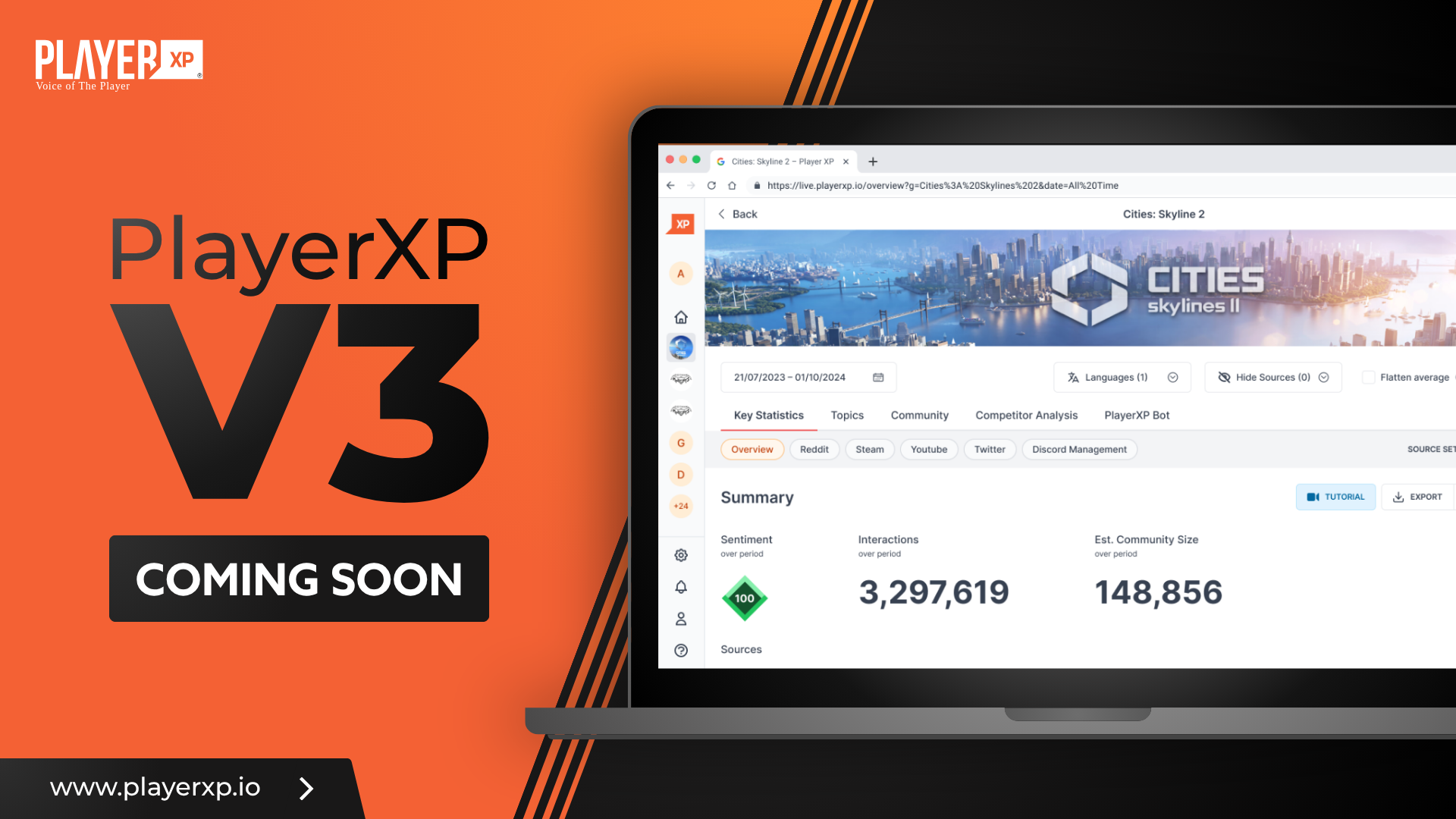
At PlayerXP, we are dedicated to pushing boundaries. As leaders of the tech industry here in Cornwall, we use the latest Machine Learning technology and Cloud infrastructure to provide never-before-seen customer insights for organisations around the world. To ensure our products remain competitive and cutting-edge, we are constantly testing, iterating and innovating.
Get a firsthand look at Paws of Destruction, an incredibly fun mobile prototype built by tomorrow's game directors. See what our team thought of the pitch, read our Solutions Manager's take, and play the build right now.
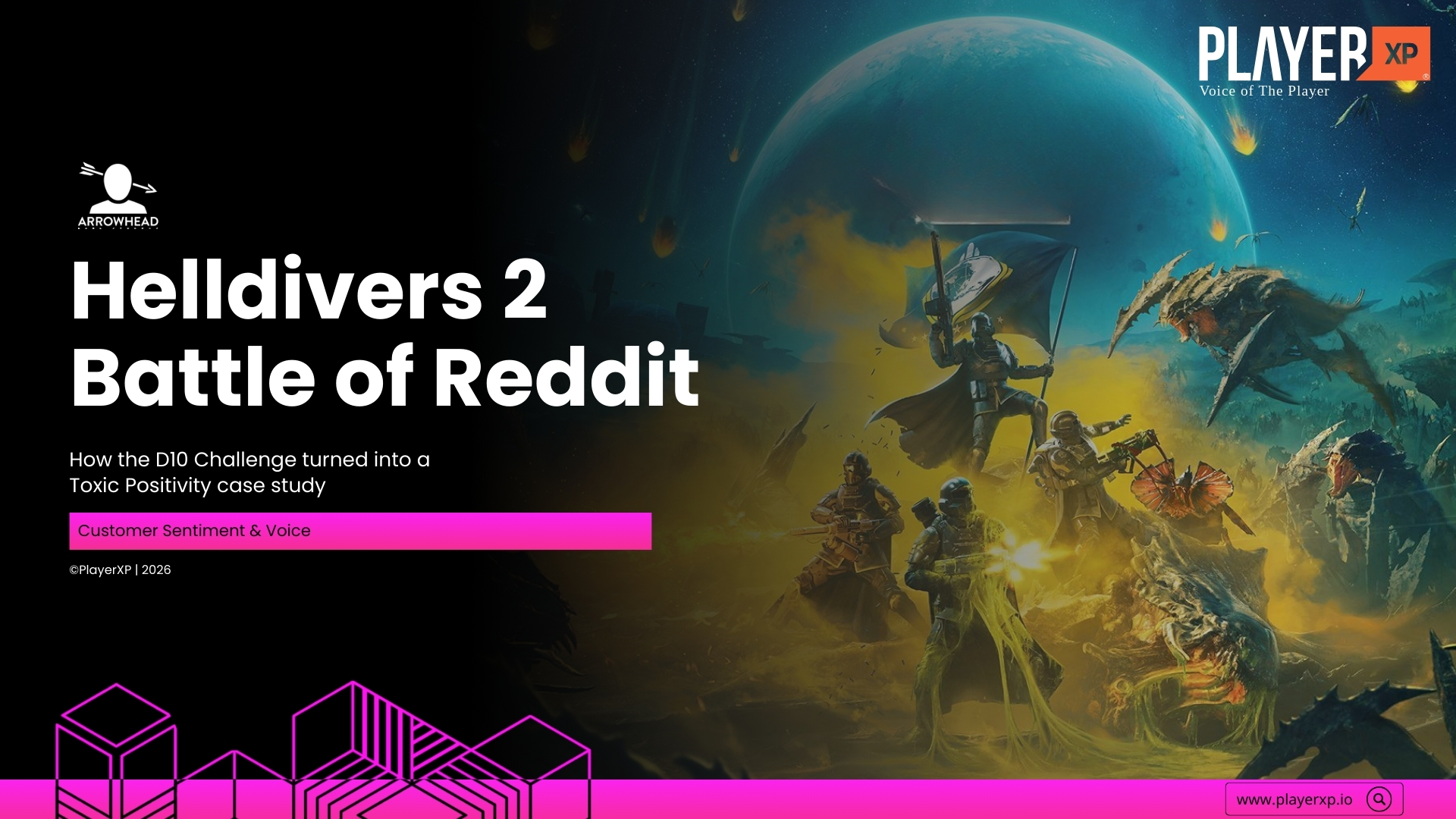
When a $1,000 charity challenge turned into one of the most divisive moments in Helldivers 2, it revealed a side of gaming communities that often goes unnoticed: Toxic Positivity.